

Key Takeaways
- Workplace sustainability doesn’t require expensive renovations or major operational changes.
- Reducing waste, conserving energy, and encouraging sustainable habits can benefit both the environment and your business.
- Small changes, such as reducing paper use or switching to energy-efficient equipment, can make a meaningful difference over time.
- Eliminating single-use plastics is one of the simplest ways businesses can reduce their environmental impact.
- Bottleless water systems support sustainability by reducing plastic waste, minimizing delivery-related emissions, and providing convenient access to filtered drinking water.
Sustainability Starts with Everyday Decisions
For many businesses, sustainability is now part of how they operate, attract employees, and demonstrate social responsibility.
In many cases, the biggest improvements come from small, practical changes that reduce waste, conserve resources, and encourage better workplace habits.
According to Statistics Canada’s Canadian Survey on Business Conditions, two-thirds (66.7%) of Canadian businesses already have environmental practices in place, with reducing waste being the most common initiative.
Whether your business is just getting started or looking for new ways to build on existing efforts, there are plenty of practical changes that can make a meaningful difference.
Here are seven places to start.
1. Reduce Single-Use Plastics
One of the easiest opportunities to improve workplace sustainability is reducing disposable plastic products.
Many offices still rely on plastic water bottles, disposable coffee cups, plastic utensils, and individually packaged snacks. While each item may seem insignificant on its own, they quickly add up over the course of a year.
Simple changes can significantly reduce waste, including:
- Encouraging employees to use reusable water bottles and coffee mugs
- Replacing disposable kitchen supplies with reusable alternatives
- Purchasing products with minimal packaging
- Providing refill stations instead of bottled beverages
These changes also help reinforce sustainable habits that employees can carry beyond the workplace.

2. Replace Bottled Water with a Bottleless Water System
Businesses have traditionally relied on bottled water or large water jugs to provide drinking water for employees and visitors. These systems create ongoing plastic waste, require regular deliveries, and take up valuable storage space.
A bottleless water system offers a more sustainable alternative.
Instead of relying on plastic bottles or heavy water jugs, these systems connect directly to your building’s existing water supply. Advanced filtration removes impurities while providing fresh, filtered drinking water on demand.
Making the switch can help businesses:
- Eliminate plastic water bottle waste
- Reduce the number of large plastic water jugs entering the workplace
- Minimize delivery truck emissions associated with water deliveries
- Encourage employees to refill reusable water bottles
- Free up storage space previously used for water bottles or jugs
Beyond the environmental benefits, bottleless water systems also provide a convenient, consistent source of drinking water without the interruptions of scheduling deliveries or running out of water.
For organizations looking to make a meaningful sustainability improvement, this is often one of the most practical places to begin.
3. Improve Energy Efficiency Throughout the Office
Energy consumption is another area where small improvements can produce lasting results.
Many businesses continue using outdated lighting, aging office equipment, or inefficient heating and cooling schedules that consume more energy than necessary.
Consider steps such as:
- Replacing older lighting with LED fixtures
- Installing occupancy sensors in meeting rooms and restrooms
- Upgrading to ENERGY STAR® certified equipment when replacing aging devices
- Programming heating and cooling systems around business hours
- Turning off computers, monitors, and other equipment at the end of the day
Each improvement may seem relatively small, but together they can reduce energy consumption over time while supporting broader sustainability goals.
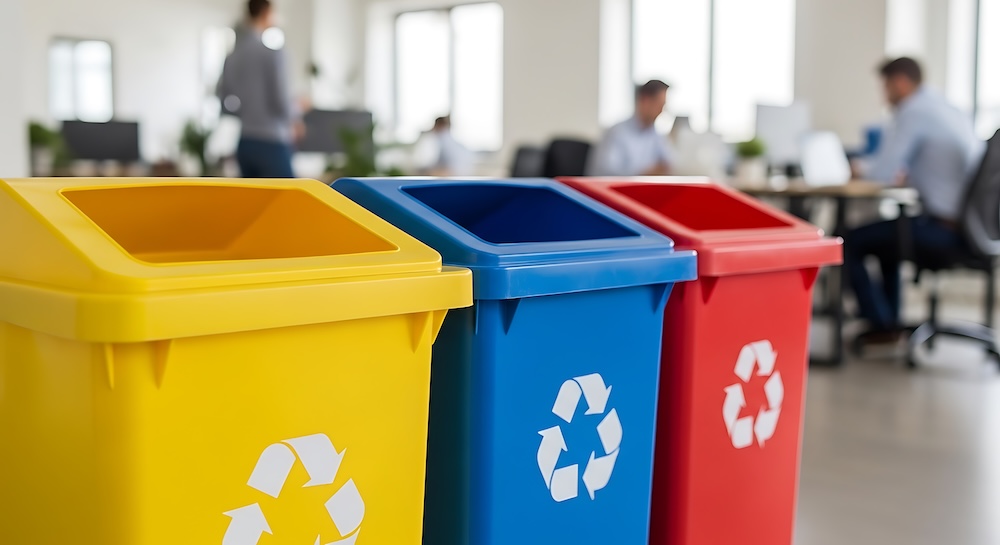
4. Strengthen Your Recycling and Waste Reduction Program
Many workplaces provide recycling bins, but participation often depends on how easy the program is to use.
Employees are much more likely to recycle when bins are clearly labelled and conveniently located.
Businesses can strengthen their recycling efforts by:
- Placing recycling stations in common areas
- Clearly identifying which materials belong in each container
- Recycling toner cartridges and electronic waste responsibly
- Reducing unnecessary packaging when purchasing supplies
- Exploring composting options where appropriate
Reviewing your waste stream periodically can also help identify materials that could be reduced or eliminated altogether.
5. Reduce Paper Use Without Eliminating Print
Many businesses still require printed documents for legal, operational, or customer-facing purposes. Rather than eliminating print entirely, focus on using it more thoughtfully.
Some practical strategies include:
- Defaulting printers to double-sided printing
- Digitizing forms and internal workflows
- Using electronic signatures when appropriate
- Sharing documents digitally instead of printing multiple copies
- Printing only final versions of documents
Reducing unnecessary printing lowers paper consumption while often improving document accessibility and version control.
6. Encourage Sustainable Workplace Habits
The most successful sustainability initiatives involve people as much as they involve equipment.
Creating a workplace culture that values sustainability encourages employees to make environmentally responsible choices throughout the day.
Simple ideas include:
- Providing reusable water bottles for new employees
- Encouraging reusable lunch containers and coffee mugs
- Turning off lights when rooms aren’t being used
- Powering down equipment before leaving for the day
- Supporting carpooling, cycling, or public transit where practical
- Holding virtual meetings when travel isn’t necessary
These habits require very little investment but can have a lasting impact when practiced consistently across the organization.
7. Choose Vendors That Support Your Sustainability Goals
Your sustainability efforts don’t end with your own workplace.
The companies you partner with can also influence your environmental impact.
When evaluating vendors, consider questions such as:
- Do they offer products designed to reduce waste?
- Do they prioritize energy-efficient equipment?
- Do they recycle or responsibly dispose of outdated equipment?
- Do they minimize unnecessary packaging?
- Do they offer solutions that reduce ongoing transportation or delivery needs?
Working with vendors who share your commitment to sustainability can reinforce your environmental initiatives while supporting long-term business objectives.

Sustainability Is Built One Step at a Time
Most successful organizations start with practical improvements that fit their budget, workplace, and long-term goals. As those initiatives become part of how the business operates, additional opportunities often become easier to identify.
Whether you’re reducing paper consumption, upgrading lighting, strengthening your recycling program, or replacing bottled water with a bottleless water system, each improvement contributes to a workplace that uses resources more responsibly.
Frequently Asked Questions
What are the easiest ways for a business to become more sustainable?
Many businesses begin by reducing single-use plastics, improving recycling programs, upgrading to energy-efficient lighting, reducing unnecessary printing, and encouraging reusable products throughout the workplace. These initiatives are relatively straightforward to implement and can deliver meaningful environmental benefits over time.
Why are bottleless water systems more sustainable than bottled water or water jugs?
Bottleless water systems connect directly to a building’s water supply and filter water on demand. This eliminates the ongoing need for plastic water bottles or large water jug deliveries, helping businesses reduce plastic waste, storage requirements, and transportation-related emissions.
Does promoting sustainability benefit businesses as well as the environment?
Yes. Many sustainability initiatives can reduce operating costs by lowering energy consumption, minimizing waste, and reducing the need for disposable products. They can also support employee wellness, demonstrate environmental responsibility, and align with the expectations of customers, employees, and business partners.
Make Sustainability Part of Your Workplace
One meaningful change can be the beginning of a more sustainable workplace.
If your business is looking for a simple way to reduce plastic waste while providing employees and visitors with clean, filtered drinking water, Pure Water Ontario can help. Our bottleless water systems eliminate the need for bottled water and traditional water jugs, making it easier to support your sustainability goals while creating a more convenient workplace.
Contact Pure Water Ontario today to learn more about our bottleless water solutions for businesses across Ontario.
